

 English
 Español
 عربى
عربىA tote bag that works well in theory frequently fails in practice. Keys migrate to the bottom, a phone disappears beneath a folded jacket, and a loose pen leaves marks on the lining by the end of the first week. The problem is not the bag itself — it is the absence of structure inside it. Women's Cotton Tote Bags and canvas versions have become standard carriers for daily use precisely because they are lightweight, spacious, and easy to carry, but that open interior, which makes them so convenient to load, is also what makes them difficult to keep organized. The solution lies in a combination of the right accessories and the right bag construction from the outset.
The Problem with Open-Interior Tote Bags
Most tote bags ship as a single compartment. The interior may have a small zippered pocket sewn into the lining, but the main cavity remains undivided. Everything placed inside sits together, shifts during movement, and settles into a layered pile that requires excavation to navigate. This is not a design flaw so much as a design trade-off — an open cavity is easier to manufacture, easier to pack quickly, and less expensive to produce than a structured interior. The trade-off becomes apparent in actual daily use.
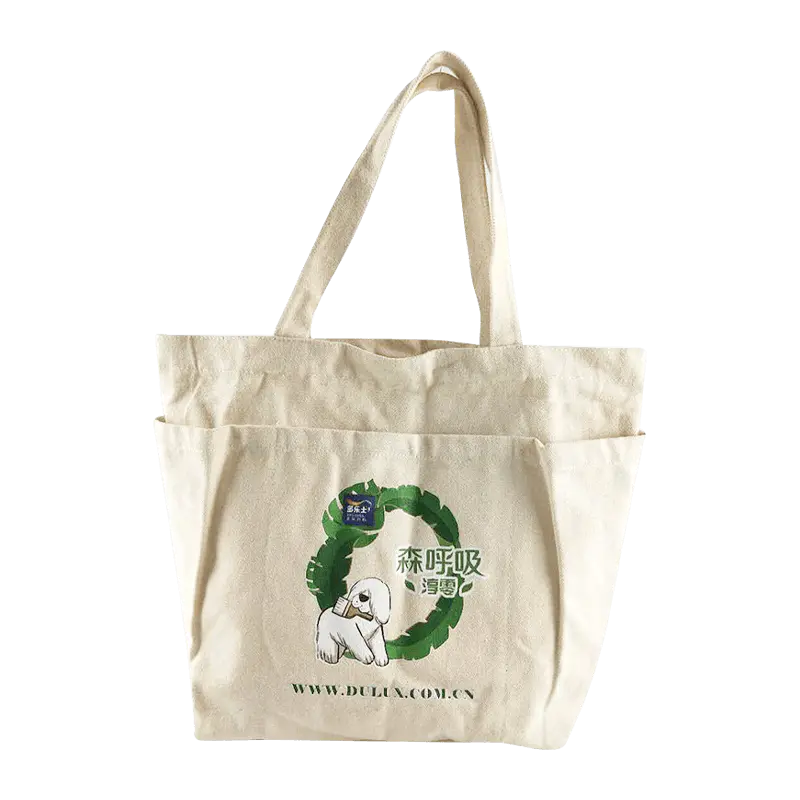
The clutter problem compounds based on how the bag is used. A shopper who carries a tote to a grocery store once a week encounters it occasionally. A commuter who carries the same bag five days a week, loading and unloading it multiple times daily, encounters its structural limitations constantly. For that second user — and for any brand or retailer supplying that user — the interior organization of the bag matters as much as its exterior material and handle design.
What Accessories Actually Solve the Organization Problem?
Bag Organizer Inserts
A bag organizer insert is a structured interior liner, usually made from felt, nylon, or a stiffened fabric, that sits inside the tote and divides the cavity into defined sections. It holds its shape independently of the bag itself, which means it can be transferred from one tote to another without adjustment. Inserts typically include a combination of open pockets for bottles or rolled items, smaller slip pockets for cards or a phone, and a zippered section for items that need to stay contained.
The practical effect is significant. Rather than searching through a single cavity, the user reaches to a known location for each category of item. The insert also props the bag open slightly at the top, which makes loading faster when both hands are occupied — a small detail that becomes noticeable within the first few days of use.
Interior Pouches and Zip Pouches
A zip pouch used inside a tote bag functions as a portable sub-compartment. Cosmetics, charging cables, medications, and other small items that would otherwise scatter across the bag's base are contained in a single unit that can be lifted out when needed. The pouch is not attached to the bag, which makes it flexible — it can be moved to a different bag, placed on a desk as a stand-alone organizer, or handed off without transferring the contents individually.
For bags used across multiple contexts — commuting in the morning, shopping in the afternoon — the removable pouch approach allows the user to maintain consistent organization without repacking the entire bag each time its primary purpose changes.
Key Clips and D-Ring Attachments
Key clips attach to a D-ring or loop sewn into the bag's lining and hold keys at a fixed point. The result is that keys are always in the same location and retrievable in one motion. Without a clip, keys sink and shift with every movement of the bag. The clip itself is a minor accessory, but its effect on the daily experience of using the bag is disproportionate to its size.
Some bag designs incorporate D-rings into the lining during manufacturing, which makes this option available without any modification. When sourcing bags for a brand or retail program, the inclusion of interior attachment points is worth specifying as a production detail rather than treating it as an afterthought.
Divider Panels and Snap-In Organizers
Divider panels are rigid or semi-rigid inserts that slot into the bag vertically, creating two or three lanes within the main cavity. Unlike a full organizer insert, a divider does not add multiple pocket layers — it simply prevents items on opposite sides of the bag from mixing. This works well for users who carry consistently shaped items: a notebook on one side, a water bottle on the other, everyday carry in the center.
Snap-in organizers use a clip or tension mechanism to attach to the bag's handles or upper frame, hanging inside the cavity rather than resting on the bottom. They are particularly useful in tote bags with longer handles, where a floor-resting insert would sit too low to be convenient.
How Bag Design Affects Whether Accessories Work
Structural Rigidity of the Bag Body
Accessories work more effectively in bags that hold their shape. A Foldable Cotton Tote Bag, which collapses flat for storage and is carried in a pocket or another bag, will not accommodate a rigid organizer insert — the insert defeats the bag's foldability, which is its primary functional advantage. For a foldable tote, the appropriate organizational approach is limited to lightweight pouches and a key clip, rather than a structured insert.
A bag with a more rigid base and stiffer sidewalls provides the structural support that allows an insert to function as intended. The insert rests on the base, maintains its upright position, and keeps the main cavity divided. In a bag with a soft, flexible base, the insert collapses under load and loses its organizational function.
Pocket Placement in the Original Design
Bags that incorporate exterior pockets, slip pockets at the top opening, or a zippered lining pocket reduce the organizational burden placed on accessories. A phone slipped into an exterior pocket does not enter the main cavity at all — it remains accessible without opening the bag and does not displace other items below. When evaluating tote bags for a product line or retail program, pocket placement relative to the user's typical carry items is worth examining before committing to a design.
Handle Length and Bag Depth
Handle length determines whether the bag hangs at the hip or rests under the arm, which in turn affects how accessible the interior is during use. A bag that hangs at the hip requires the user to look down and reach at an angle to access the interior. A bag worn under the arm keeps the opening closer to hand level. The depth of the bag affects how far items can sink — a shallow bag with equivalent volume keeps items nearer the opening than a deep narrow bag of the same capacity.
These dimensions are relevant when specifying a bag for a defined use case. A bag intended for daily commuting has different handle and depth requirements than one intended for weekend shopping or beach use.
Comparing Tote Bag Types by Organization Suitability
Different bag constructions create different organizational environments. The table below outlines how the primary tote bag categories compare across the factors that affect how well they support interior organization.
| Feature | Women's Cotton Tote | Foldable Cotton Tote | Canvas Tote |
|---|---|---|---|
| Structural Rigidity | Moderate | Low | Moderate to High |
| Compatible with Inserts | Yes | Limited | Yes |
| Folds Flat for Storage | No | Yes | No |
| Interior Pocket Options | Varies | Minimal | Varies |
| Weight | Light | Very Light | Moderate |
| Durability Under Daily Use | Good | Moderate | High |
| Suitable for Custom Lining | Yes | Limited | Yes |
The table reflects construction tendencies rather than fixed rules — a canvas tote with no interior pockets and a soft base will not outperform a well-constructed cotton tote with a reinforced bottom and built-in dividers. What the table identifies is the general relationship between material and structural characteristics, which shapes what organizational accessories are practical for each category.
Use Cases: Which Bag Type Fits Which Scenario?
Daily Commuting
A commuter needs to access items repeatedly throughout the day — transport card, phone, earphones, keys — while also carrying bulkier items like a laptop sleeve or a packed lunch. The bag needs enough structure to hold an organizer insert effectively, a secure closure to prevent items from spilling when the bag is set down or bumped, and handles long enough to allow shoulder carry with a coat on. A standard cotton tote with a structured base and a zippered top closure, fitted with an organizer insert, meets this profile better than a foldable version.
Grocery and Retail Shopping
A shopping tote needs volume and strength rather than interior organization. The contents change with every use, making fixed compartments less relevant. A Foldable Cotton Tote Bag is particularly suited to this scenario — it can be carried in a pocket or handbag until needed, then expanded to carry a variable load. Organizational accessories add less value here; the priority is load capacity and packability.
Travel and Overnight Packing
A tote used as a travel carry-on or overnight bag benefits from a combination of a structured base, multiple interior zones, and a secure closure. Pouches serve as the primary organizational tool in this scenario, with each pouch dedicated to a category of item: electronics, toiletries, documents. The bag does not need an insert if the pouches provide sufficient structure — the key is that each item category is contained before it enters the bag, rather than organized within the bag after loading.
Eco-Lifestyle and Reusable Bag Programs
Reusable tote bags distributed as part of retail loyalty programs, brand promotions, or environmental campaigns are often used across multiple contexts — grocery shopping one day, casual carry the next. These bags benefit from a simple interior design with at least one secure pocket for a phone or wallet, and a base that maintains its shape under moderate load. Canvas or reinforced cotton constructions are common choices for these programs because they hold up through frequent washing and varied use.
What to Look for When Sourcing Organized Tote Bags
Interior Pocket Specifications
When sourcing bags from a manufacturer, interior pocket specifications should be treated as a design variable rather than an optional feature. The number, placement, and dimensions of interior pockets should reflect the intended user's carry habits. A phone pocket positioned near the top of the lining is more useful than one placed at the base. A zippered pocket with a pull tab large enough to operate with one hand is more functional than a slide-zip on a narrow opening.
Base Reinforcement
A reinforced base — achieved through a sewn-in board, a folded fabric panel, or a thicker base construction — allows the bag to stand upright when set down and distributes the load across the base rather than concentrating it at the handle attachment points. For bags that will be used to carry heavy or irregularly shaped items, base reinforcement extends usable life and improves the bag's functional experience.
Lining Material and Color
Interior lining material affects both durability and practical usability. A lighter-colored lining makes contents easier to see in low light. A lining material that wipes clean reduces the maintenance burden in bags used for food or cosmetics. For bags intended for regular washing, the lining should be preshrunk and colorfast so that repeated laundering does not distort the bag's interior structure.
Customization for OEM Programs
For buyers sourcing bags under an OEM arrangement, the customization options relevant to organization go beyond exterior printing and handle color. Internal pocket layout, base construction, closure type, and lining material can all be specified to create a bag that performs a defined function well, rather than one that relies on the end user to supply the organizational accessories it lacks. An OEM Cotton Tote Bag developed with interior specifications based on the target user's carry habits will generate fewer complaints and higher repeat use rates than a generic print-on-demand blank.
Cotton vs. Canvas: Does Material Affect Organization?
The material of the bag body affects organization indirectly, through its influence on structural rigidity, weight, and washability.
Cotton tote bags — particularly lightweight woven cotton — are soft and flexible, which makes them comfortable to carry but less supportive of rigid interior inserts. Women's Cotton Tote Bags in this construction are typically paired with soft pouches and clip accessories rather than structured inserts. Heavier cotton — a thicker weave or a layered construction — behaves more like canvas and can support a structured insert without collapsing.
Canvas tote bags use a more tightly woven, heavier fabric that holds its shape more effectively. The stiffer sidewalls create a stable environment for inserts and dividers, and the bag maintains its profile when set down rather than flopping to one side. Canvas also tolerates heavier loads without the sidewall distortion that lighter cotton can develop over time.
The choice between cotton and canvas is therefore partly a choice between packability and structure. A Foldable Cotton Tote Bag that collapses flat in a pocket will not carry an organizer insert effectively. A canvas bag that holds its shape without a base board will. For brands and retailers choosing between the two materials for a specific product line, the organizational expectations of the target user should inform that decision as directly as any aesthetic or cost consideration.
How Manufacturers Can Build Organization Into the Bag
The accessories discussed above exist because most tote bags are produced without interior organization built in. That is a manufacturing convention, not a necessity. A bag developed with the end user's carry habits in mind can incorporate many of the functions that accessories provide — without requiring the user to purchase or manage additional items.
Built-in organization options that manufacturers can incorporate at the production stage include:
- Multiple interior slip pockets at varying depths, positioned for different item categories
- A zippered interior pocket with a reinforced zipper tape and a pull tab that operates reliably over extended use
- A D-ring or key clip sewn to the lining, positioned near the top of the bag for one-motion key access
- A base board or thick base panel that allows the bag to stand upright when set down
- An exterior zippered or magnetic-closure pocket for items that need to be accessed without opening the main closure
- A loop or strap sewn to the lining for securing an umbrella or rolled document
These are not complex engineering additions — they are design decisions that can be specified during the product development phase and incorporated into production at a Canvas Bags Factory with pattern customization capability. The resulting bag requires no accessories to function well, which is a more satisfying product experience and a more coherent design proposition.
Sourcing Organized Tote Bags from a Manufacturer
For buyers evaluating manufacturers for cotton and canvas tote bag production, the distinction between a factory that produces to a fixed template and one that can execute to a custom interior specification is significant. Interior organization features require pattern adjustment, additional materials, and in some cases additional production steps — capabilities that not every production facility accommodates equally.
When evaluating a prospective factory for an OEM Cotton Tote Bag program, the questions worth asking go beyond price per unit. What is the facility's experience with custom lining specifications? Can they supply fabric samples for interior materials? What is the minimum order quantity for a custom pattern that includes interior pockets? How are closure hardware and D-ring attachments sourced and tested for durability? The answers reveal whether the manufacturer is equipped to execute a functional product brief or primarily set up for high-volume production of standard designs.
Wenzhou Laoliu Environmental Eco Bag Co., Ltd. produces cotton and canvas tote bags for retail, promotional, and OEM programs, with production capabilities that extend to custom interior configurations, material selection, and closure specifications. For buyers who want to source a bag that performs a specific organizational function rather than a generic carrier that relies on aftermarket accessories, reaching out to discuss product brief requirements, material options, and sampling timelines is a practical starting point.